
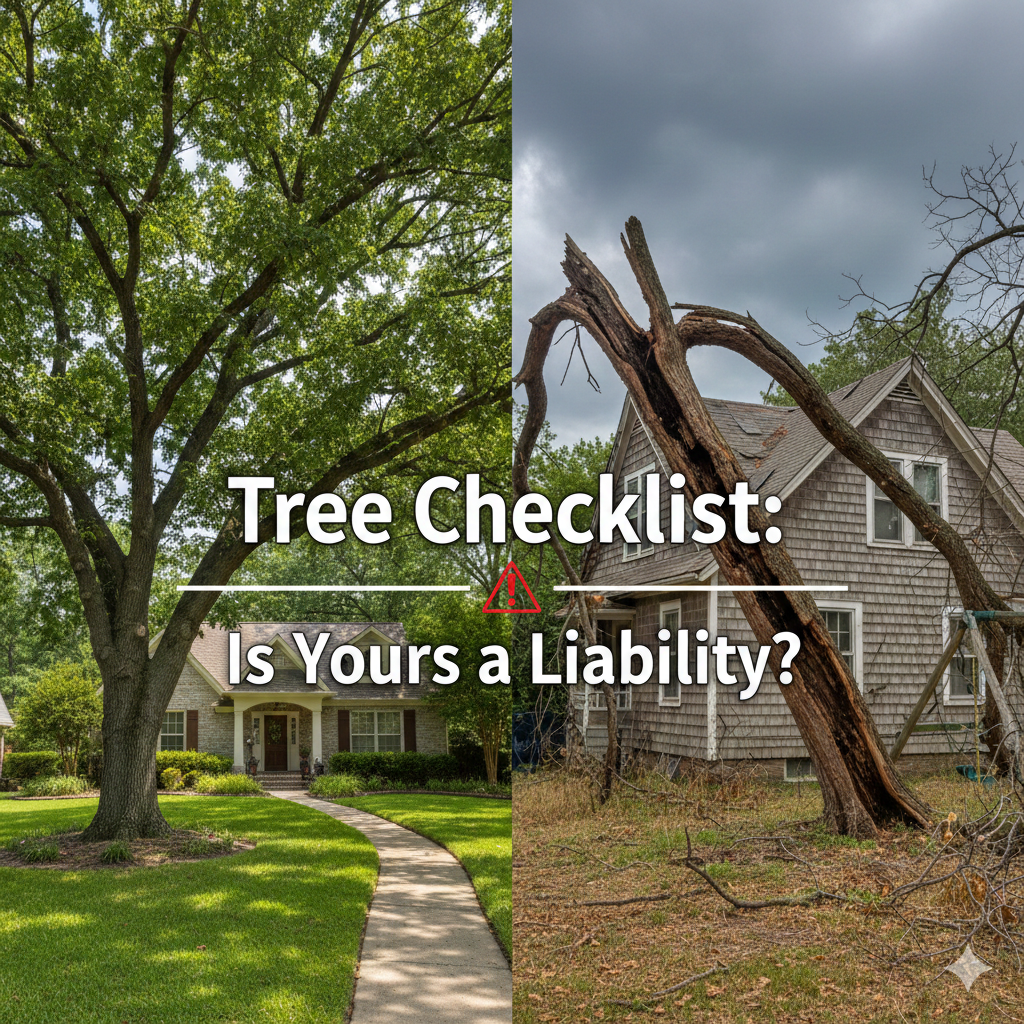
If a tree on your property is showing structural weakness, disease, or signs of instability, the safest solution is to have it professionally evaluated before it becomes a costly or dangerous problem. We understand that trees usually add value in the form of shade, beauty, privacy, and environmental benefits. However, not every tree remains an asset forever. With time, that beautiful tree in your backyard can turn into a serious liability. When this happens, a certified tree expert can assess risk factors, recommend pruning or treatment when possible, and advise removal only when necessary. Acting early protects your home, your family, and even the surrounding healthy trees.
Here are the most common risk factors that signal a tree may be more of a liability than an asset.
Is the canopy telling the story of decay?
One of the first things a professional looks at is the “crown” or the leafy part of the tree. A healthy asset has a full, vibrant canopy. Do you notice large sections of dead wood? This is what arborists call “dieback”, when the tree is struggling to transport nutrients.
Dead branches are a primary liability because they can fall at any time, even without a major storm. If more than 25% of the canopy is thin or leafless, the tree is likely in decline. This doesn’t always mean the tree must go, but it does mean it has become a liability that requires immediate weight-reduction pruning.
Is your tree leaning dangerously?
A tree tilting more than 15 degrees screams trouble. If the lean is recent, it indicates that the roots snapped from drought, erosion, or burrowing critters.
Stand back 50 feet and take a look. If the top veers toward your roof or driveway, wind could topple it like dominoes. We’ve seen neighbourhood maples shift after soggy winters here in Connecticut, and garages get crushed before owners even blink.
Do you see any dead or falling branches?
Deadwood is more than just an eyesore. It can prove to be a serious hazard. If there are any large dead limbs, they can fall suddenly, especially during wind or heavy rain. Even smaller branches can cause injury or damage vehicles and roofs. We have observed that if more than 25–30% of the canopy is dead or dying, the tree may be in serious decline. It could indicate an underlying disease or root issues.
Pruning can be the solution in case of isolated dead limbs. However, extensive canopy death is indicative of deeper problems that require professional evaluation.
Is the trunk showing signs of hollows and fungi?
For a healthy tree, the trunk must be strong and healthy. If you see large cavities, holes, or “conks” (shelf-like mushrooms) growing from the base or the bark, it is a sign of internal rot. While a tree can survive with some internal hollowness, there is a tipping point. If the shell of sound wood is too thin to support the weight of the canopy, the tree becomes a ticking time bomb. An arborist can often “sound” the trunk to determine how much solid wood remains.
Are the roots damaged or compromised?
Healthy roots anchor a tree and supply nutrients. Construction activity, soil compaction, trenching, or changes in grading can severely damage root systems. When roots are cut or suffocated, the tree loses stability.
Some of the most common signs of root problems include thinning leaves, stunted growth, or soil heaving around the trunk. If you notice exposed or decaying roots, do not ignore them. Root failure is one of the leading causes of tree collapse during storms.
Is the tree too close to structures?
Location matters. If a tree is planted too close to a house, garage, or driveway, it can create an ongoing risk. Overhanging limbs may scrape roofing materials or clog gutters. Worse still, roots can interfere with foundations, sidewalks, and underground utilities.
Even a healthy tree becomes a liability if its growth outgrows the available space. Strategic pruning may reduce this risk. In tighter spaces, removal may prove to be the safest long-term option.
Why professional assessment matters?
Not every risk factor means removal is the only answer. In many cases, selective pruning, cabling, bracing, or soil management can extend a tree’s safe lifespan. The key is early detection.
Tree professionals evaluate structural strength, root stability, disease progression, and overall health. The experts have the experience and diagnostic tools to determine whether a tree can be preserved safely or if removal is the responsible choice. Delaying action can turn a manageable situation into an emergency.
Key Takeaways
Trees are valuable assets. That is, until structural instability, disease, root damage, poor placement, storm injury, internal decay, or chronic interference turn them into risks. Warning signs like leaning trunks, falling limbs, fungal growth, and root upheaval should never be ignored.
If you suspect that the tree in your backyard could pose a risk, you should seek professional evaluation at the earliest to get clarity. Sometimes, a tree can be saved with proper care. However, in other cases, removal is the only choice and can protect your home, your family, and the surrounding trees.
When safety and long-term property health are at stake, informed action makes all the difference.
Concerned about a tree on your property? Call us now to schedule a professional assessment and get clear, expert guidance before a small risk becomes a costly problem.